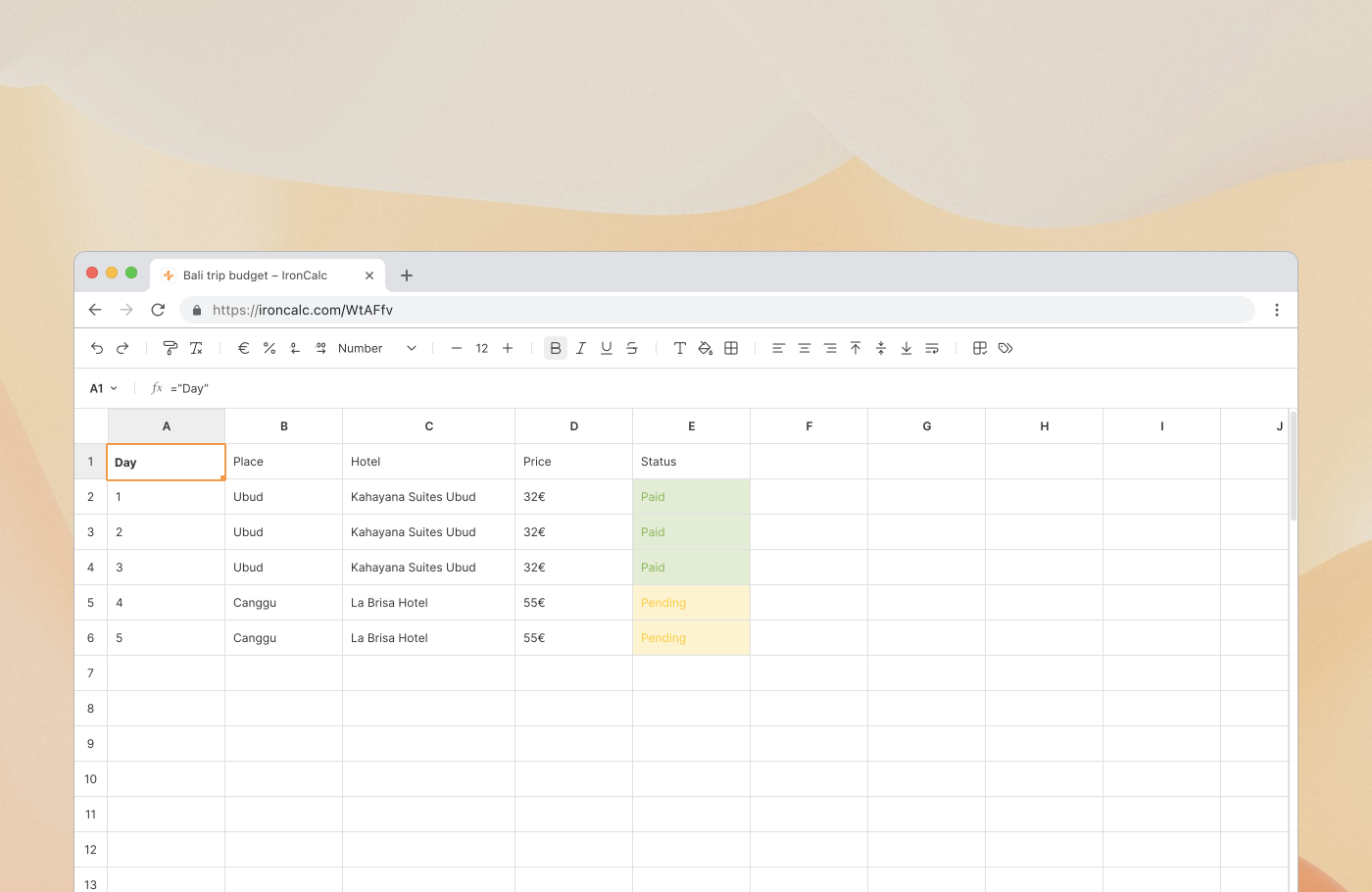
IronCalc is a modern, open-source spreadsheet engine. It works as a standalone app, as an embeddable component inside your own product, or as a headless engine for programmatic calculations. The idea is that one engine should cover all of these.
It supports 300+ Excel-compatible functions, .xlsx import and export, multi-sheet workbooks, named ranges, dynamic arrays, conditional formatting, and multi-locale support with timezone handling. We want it to work with the spreadsheets people already have, not replace them with something incompatible.
It is written in Rust and runs natively and in WebAssembly, with bindings for Python, JavaScript, and Node.js. Dual-licensed under MIT and Apache 2.0.
IronCalc started as a side project drawing on all the experience we gained at our previous companies building spreadsheet-based software. Over time, we noticed that while great options already existed, none of them adapted exactly to what we needed.
We wanted to spare other makers from having to build yet another spreadsheet engine from scratch. We built IronCalc in Rust and WebAssembly to keep it fast and portable, and designed it from the start to work both embedded and standalone.
During the first couple of years we had a positive response from users, we hit the top of Hacker News and our GitHub stars kept growing, but we weren't quite ready to make the leap. In late 2025 we joined the ELFA consortium and applied for a grant from the European Commission. That grant was awarded in early 2026, and we decided to take the plunge and found IronCalc GmbH, established in Berlin.
Building in the open matters to us. We wanted people to see how IronCalc is built, not just what it does.
We've shared our goals and roadmap from the start, which helped us build a small community on Discord where people ask questions and work through problems together.
IronCalc's frontend is built in React and CSS. We've put a lot of work into keeping it lightweight, cutting external frontend libraries and being careful about every dependency we pull in. That also meant building our own design system in Figma and Storybook, which we're still growing.
Designing a spreadsheet is harder than it sounds. There are already a lot of them out there and most look and feel the same, so standing out is tricky. IronCalc also has a hybrid use case: it needs to work as a standalone app and as something embedded in someone else's product. The clean, minimal look is intentional. We wanted something you could drop into your own product and style without it fighting back.

It also needed to feel familiar. People already know how spreadsheets work, so we didn't want to reinvent the wheel. But we did want it to look like its own thing. We use a simple color palette with orange accents (as a small nod to Rust), a way to avoid the Excel green tones that most spreadsheet tools default to.
We have a clear roadmap for the next two years. By the end of 2026 we want to ship a spreadsheet that covers the needs of 99% of users, whether they use it embedded in their own product or as a standalone app.
The product part feels within reach. The harder question is how to turn IronCalc into a stable company while keeping it open source. That's what we're figuring out next, and honestly it's the part we're most curious about.
IronCalc is made in collaboration with nhatcher, whose mentorship has helped me reach goals that felt unimaginable just a few years ago.
IronCalc has received support from the European Commission via the Horizon EU grants, and from the NLnet Foundation via the NGI0 Entrust Fund.